866.633.1597
  Mon-Fri 8:30am-5:00pm CST



Power Pumping: How to Boost Milk Supply Fast for New Moms
If you’ve ever sat with your breast pump and wished the bottles would fill faster, you’re not alone. Many new moms experience dips in milk supply, that’s especially true when you’re returning to work, recovering from illness, or managing stress. Power pumping is a proven method designed to mimic your baby’s cluster feeding, helping your body produce more milk in less time.
In this guide, we’ll explain what power pumping is, how it works, and how to make it effective so you can boost your milk supply quickly and safely.
What Is Power Pumping and How Does It Work?
Power pumping is a technique where you replace one regular pumping session with a longer, structured session designed to simulate cluster feeding. Cluster feeding is when your baby feeds multiple times in a short period, naturally stimulating your body to increase milk production.
Understanding Growth Spurts and Natural Cluster Feeding Cycles
Before diving into power pumping schedules, it’s helpful to understand when your baby naturally cluster feeds. Growth spurts typically occur around 3 weeks, 6 weeks, 3 months, and 6 months, though every baby is different. During these times, your little one may nurse more frequently to signal your body to increase milk production.
Power pumping works by mimicking this natural process. Instead of waiting for your baby to cluster feed, you’re proactively telling your body to make more milk through the pump-rest-pump pattern that simulates multiple feeding sessions in a short timeframe.
Why Milk Supply Can Dip
- Returning to work or being away from your baby
- Your older baby nursing less or becoming more efficient
- Illness, stress, or hormonal changes
- Temporary dips during your period
By power pumping, you send a signal to your body to produce more milk, helping you catch up on supply when you need it most.
Equipment and Setup for Power Pumping
Before starting your power pumping sessions, you’ll need the right equipment and setup:
Essential Equipment:
- Electric breast pump (double pumps work best for efficiency)
- Properly fitted breast flanges/shields
- Collection bottles or bags
- Pump tubing and valves in good condition
- Comfortable seating area with back support
Single vs Double Electric Pumps for Power Pumping
While both single and double electric pumps can be used for power pumping, there are clear advantages to using a double pump:
Double Electric Pumps:
- Allow simultaneous pumping of both breasts, triggering letdown in both sides at once
- Cut your pumping time in half, making the hour-long power pumping schedule more manageable
- Often produce higher milk output due to the simultaneous stimulation
- More efficient for busy moms who need to maximize their time
Single Electric Pumps:
- Still effective for power pumping, though sessions will take longer
- May require alternating between breasts during the pumping portions
- Can be a good option if you’re testing whether power pumping works for you before investing in a double pump
Manual Pumps:
While electric pumps are recommended, manual pumps remain a viable alternative if that’s what you have available. The key is consistency with the power pumping schedule, regardless of pump type
Pump Assembly and Setup: Make sure all pump parts are properly assembled and clean before each session. Check that your flanges fit correctly – they should be snug but not too tight, with your nipple moving freely in the tunnel without rubbing the sides. Poor flange fit can significantly reduce pumping effectiveness and cause discomfort.
Positioning: Sit comfortably with your back supported and shoulders relaxed. Lean slightly forward to help with milk flow, and ensure the flanges are centered properly on your breasts.
Step-by-Step Power Pumping Schedule (60 Minutes)
A standard power pumping session lasts about an hour. Here’s a simple schedule:
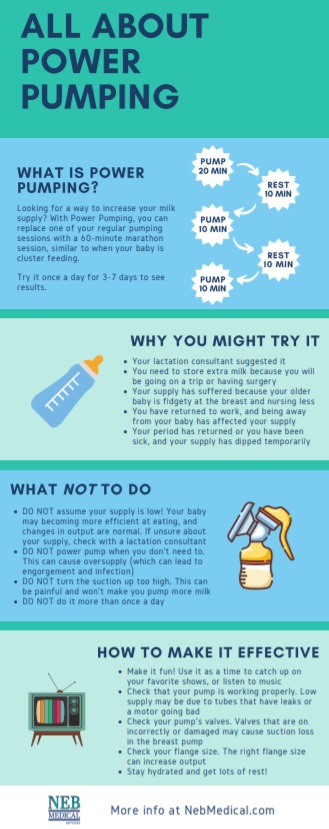
Pump. Rest. Pump. Rest. Pump.
- Pump for 20 minutes
- Rest for 10 minutes
- Pump for 10 minutes
- Rest for 10 minutes
- Pump for 10 minutes
Tip: Try this once a day for 3–7 days to see results. Most moms notice an increase in milk supply within a week. Choose a time when your milk supply is typically highest, which is often in the morning for many moms. However, the best time is when you can be consistent and relaxed. Some parents find evening sessions work better with their schedule, while others prefer mid-morning after their first nursing session.
How Often to Power Pump Per Day
Once Daily (Recommended):
Most lactation consultants recommend power pumping once per day when you’re trying to boost supply. This frequency is usually sufficient to signal your body to increase production without risking oversupply or exhaustion.
Twice Daily (Advanced):
In some cases, such as when you’re preparing for a work return or need to build a significant freezer stash quickly, you might consider twice daily sessions. However, this should only be done:
- After consulting with a lactation consultant
- For short periods (3-5 days maximum)
- With careful monitoring for signs of oversupply
Remember, more isn’t always better. Overdoing power pumping can lead to engorgement, plugged ducts, or mastitis.
Managing Power Pumping When Alone with Baby
Power pumping while caring for your baby solo requires some strategic planning:
Timing Around Baby’s Schedule:
- Choose times when your baby typically takes longer naps (often mid-morning or early afternoon)
- Consider power pumping during your baby’s longest stretch of sleep
- Some moms find success power pumping while baby plays in a bouncer or swing nearby
Breaking Up Sessions When Needed:
If a full 60-minute session isn’t possible with your baby’s schedule, you can modify the approach:
- Split the session into two 30-minute periods throughout the day
- Do a morning session (20 minutes pump, 10 minutes rest, 10 minutes pump) and an evening session (10 minutes pump, 10 minutes rest, 10 minutes pump)
- The key is maintaining the pump-rest-pump pattern, even if spread across different times
Practical Tips for Solo Power Pumping:
- Have snacks, water, and entertainment within reach before starting
- Use a hands-free pumping bra so you can tend to baby if needed
- Consider power pumping during baby’s feeding time if you’re exclusively pumping
- Keep baby engaged with toys or music during your pumping sessions
Tips for Effective Power Pumping
- Make It Enjoyable
Listen to music, watch a favorite show, or use this time for self-care. Stress can reduce milk letdown, so staying relaxed is key. - Check Your Pump
Ensure your breast pump is working correctly. Leaky tubes, damaged valves, or the wrong flange size can reduce output. - Hydration and Nutrition
Drink plenty of water and eat balanced meals to support milk production. - Monitor Your Body
Only power pump once a day, and don’t increase suction too high because it won’t produce more milk and can cause you discomfort.
When to Try Power Pumping?
- Your lactation consultant suggested it
- You need to store extra milk because you will be going on a trip or having surgery
- Your supply has suffered because your older baby is fidgety at the breast and nursing less
- You have returned to work, and being away from your baby has affected your supply
- Your period has returned or you have been sick, and your supply has dipped temporarily
What Not to Do When Power Pumping
- DO NOT assume your supply is low! Your baby may becoming more efficient at eating, and changes in output are normal. If unsure about your supply, check with a lactation consultant
- DO NOT power pump when you don’t need to. This can cause oversupply (which can lead to engorgement and infection)
- DO NOT turn the suction up too high. This can be painful and won’t make you pump more milk
- DO NOT do it more than once a day
How Long Does it Take to See Results?
Most moms notice an increase within 3–7 days of consistent power pumping. Results vary depending on your body, your overall health, and how often you pump or nurse outside of power pumping sessions.
Frequently Asked Questions About Power Pumping
Does power pumping work for everyone?
Results vary. Some moms see significant increases, while others notice only a small boost. Consistency and proper technique are key.
Can I do power pumping if I exclusively breastfeed?
Yes, but ensure it doesn’t interfere with nursing. Consult your lactation consultant for guidance.
Is it safe to power pump long-term?
Power pumping is intended as a short-term boost, not a permanent daily routine. Use it strategically when you need extra milk.
Can I break up my power pumping session throughout the day?
Yes, if a full-hour session isn’t feasible, you can split it into shorter sessions while maintaining the pump-rest-pump pattern. For example, you could do a 30-minute session in the morning and another 30-minute session in the evening, as long as you’re consistent with the timing and frequency.
What if I don’t see results after a week?
If you don’t notice any increase after 7 days of consistent power pumping, consider consulting with a lactation consultant. There may be other factors affecting your supply that need to be addressed, or you might need to adjust your technique or timing.
Check out our infographic below to get this information on what Power Pumping is, how to do it effectively, and some pitfalls to watch out for. (Click on the image to see a larger size)